
Loading...
Loading...
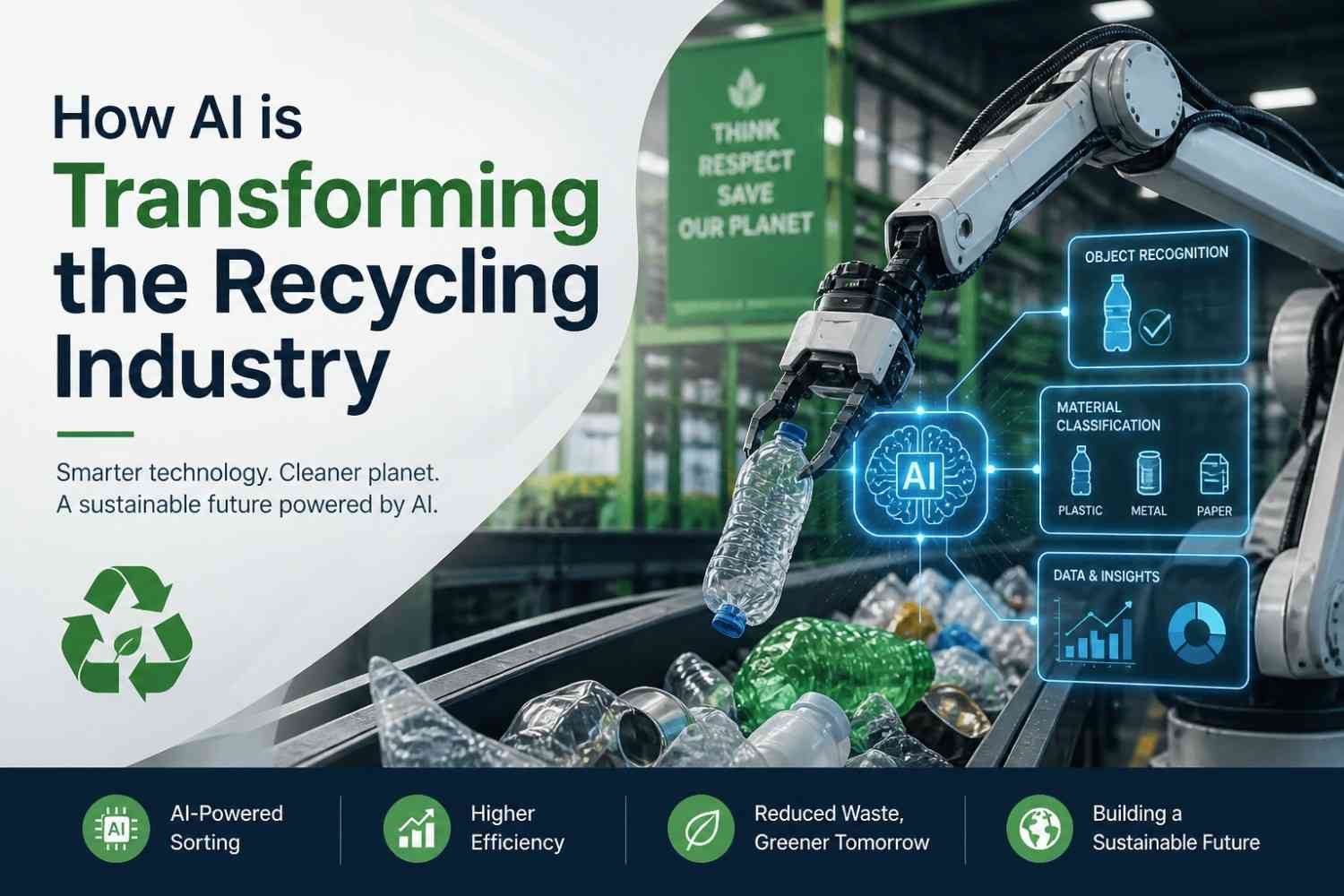
Traditional sorting is failing to meet the demands of 2026’s complex waste streams. Artificial Intelligence in recycling provides a powerful solution to change the way in which the world manages and processes different streams of waste. Facilities are now monitoring purity levels using smart sensors and deep learning. These tools identify materials that were previously impossible to separate in modern plants. This technology helps cities meet tough environmental goals while lowering the cost of waste handling.
Want to know how AI improves recycling efficiency? Read on. The following section breaks down the specific technology moving the needle for the recycling industry right now.
Understanding Artificial Intelligence in Recycling
AI in recycling refers to the use of advanced machines and software. These systems rely on computer vision and machine learning to classify different types of waste like plastics, metals and paper. Unlike traditional facilities that rely on manual labor and are prone to human error, Artificial Intelligence in recycling systems work 24/7 with high precision and steady speed.
Computer vision acts as the eyes of the modern recycling facility because it scans objects on fast belts. By analyzing physical characteristics like shape and texture, the software continuously learns from vast data to improve its recognition. This means the system actually recognises new brands or strangely shaped containers the second they appear on the belt.
5 Ways AI is Revolutionizing the Recycling Industry
AI is making every step of waste management a lot smarter and faster. It is helping to improve the process and reduce costs. The following are the primary ways this technology improves efficiency in the modern recycling industry:
Advanced Optical Sorting
AI-powered cameras and sensors identify different types of plastics based on their composition and optical properties. The materials often look identical to the human eye. This detail prevents contamination in the end product of the recycling. It ensures high purity levels and enables the increased use of recycled content in new products.
Robotic Sorting Arms
AI-controlled robots can perform up to 80 picks per minute. This is more than double the speed of a human worker. These robotic arms allow facilities to process a significantly higher volume of waste every day without fatigue or loss of accuracy.
Predictive Maintenance for Machinery
Smart systems monitor the heat and vibration patterns of heavy machines. This allows the software to pinpoint potential mechanical failures long before they occur. This prediction prevents expensive downtime as well as increases the life of heavy industrial machinery.
Waste Generation Analytics
Artificial Intelligence in recycling tools identify patterns in daily waste generated by neighborhoods. This information allows city planners to design better collection routes. Effective route planning, in turn, minimizes fuel and carbon emissions.
Quality Control Automation
Automated systems now scan the final output of recycled materials to verify they meet rigorous industry standards. This creates a "digital birth certificate" for every batch of recycled material. Such transparency builds immense trust with buyers who require certified high-quality raw materials for their supply chains.
This is how AI improves recycling efficiency. These machines work day and night without stopping. This keeps a lot of waste out of landfills and gets it back into the production cycle. Facilities can free up human labor to perform more complex tasks or quality control roles. Additionally, smart facilities can be updated with new software that allows them to identify new types of packaging without having to update the existing hardware. This allows recycling facilities to keep up with the evolving and constantly changing consumer product designs.
Future of AI in Recycling Industry
The future of AI in recycling industry involves a move towards completely autonomous "lights-out" recycling centers. The whole process in these plants is controlled by AI with the least human intervention. Many leading companies are now investing billions to upgrade facilities with these smart systems. We are also seeing a rise of smart packaging that communicates directly to recycling sensors.
The industry is witnessing the emergence of swarm robotics. These small fleets of robots work in tandem to categorise complex waste streams at ten times the speed of previous automation systems. Digital watermarking on consumer goods now tells machines exactly how to process each item. Such innovations allow scientists to identify the most efficient chemical processes for converting complex plastics back into raw materials.
As technology gets cheaper, even small local centers can start using these tools. This shift enables local communities to effectively manage their waste. Collaborative AI networks further will share data across different cities to identify regional waste trends and optimize collection routes. Such trends point towards a world where waste is not looked at as a burden but rather as a resource.
Conclusion
The recycling industry is no longer a "back-end" waste process; it is a sophisticated resource recovery sector. From robotic arms to predictive data, here is how modern facilities are finally keeping pace with the world’s growing demand for sustainable resource recovery. It offers the precision, speed, and data required to make waste management an extremely efficient industrial process. By keeping contaminants out, AI ensures we actually reuse what we throw away. Without Artificial Intelligence in recycling, modern recycling cannot scale. With it, waste becomes a valuable resource.
Machines Review helps recycling companies get their hands on the best recycling equipment available. They are making sure the industry stays ahead of the curve in the global push for a greener planet.
Join our community and get access to special deals, discounts, and updates delivered straight to your inbox every day. Don’t miss out on limited-time offers designed just for you.
sign up
leave comment